Early 18th Century English Walnut Chest of Drawers, C. 1700–1725
$3,500 $4,150
41” H; 40” W; 20.5” D
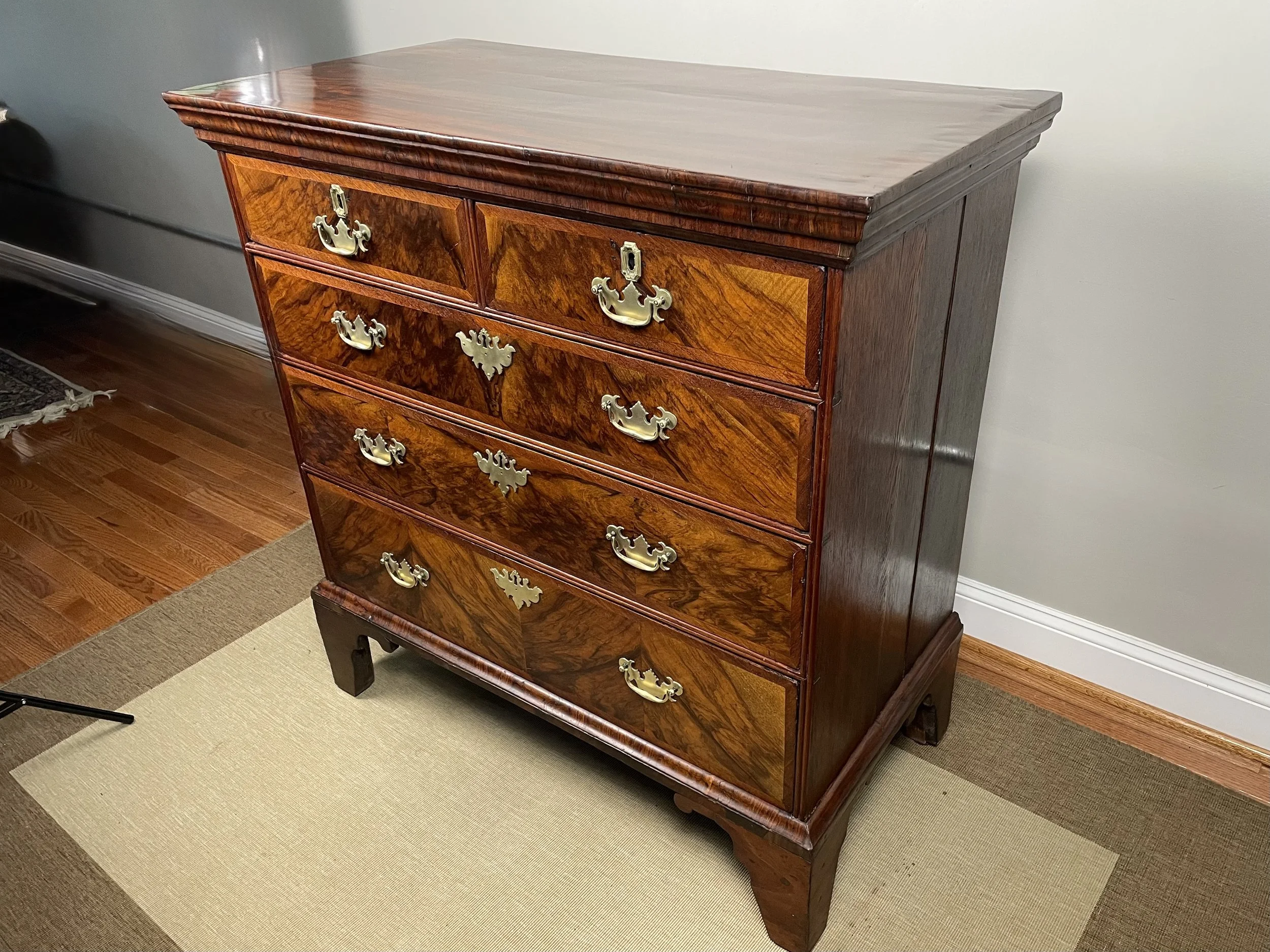
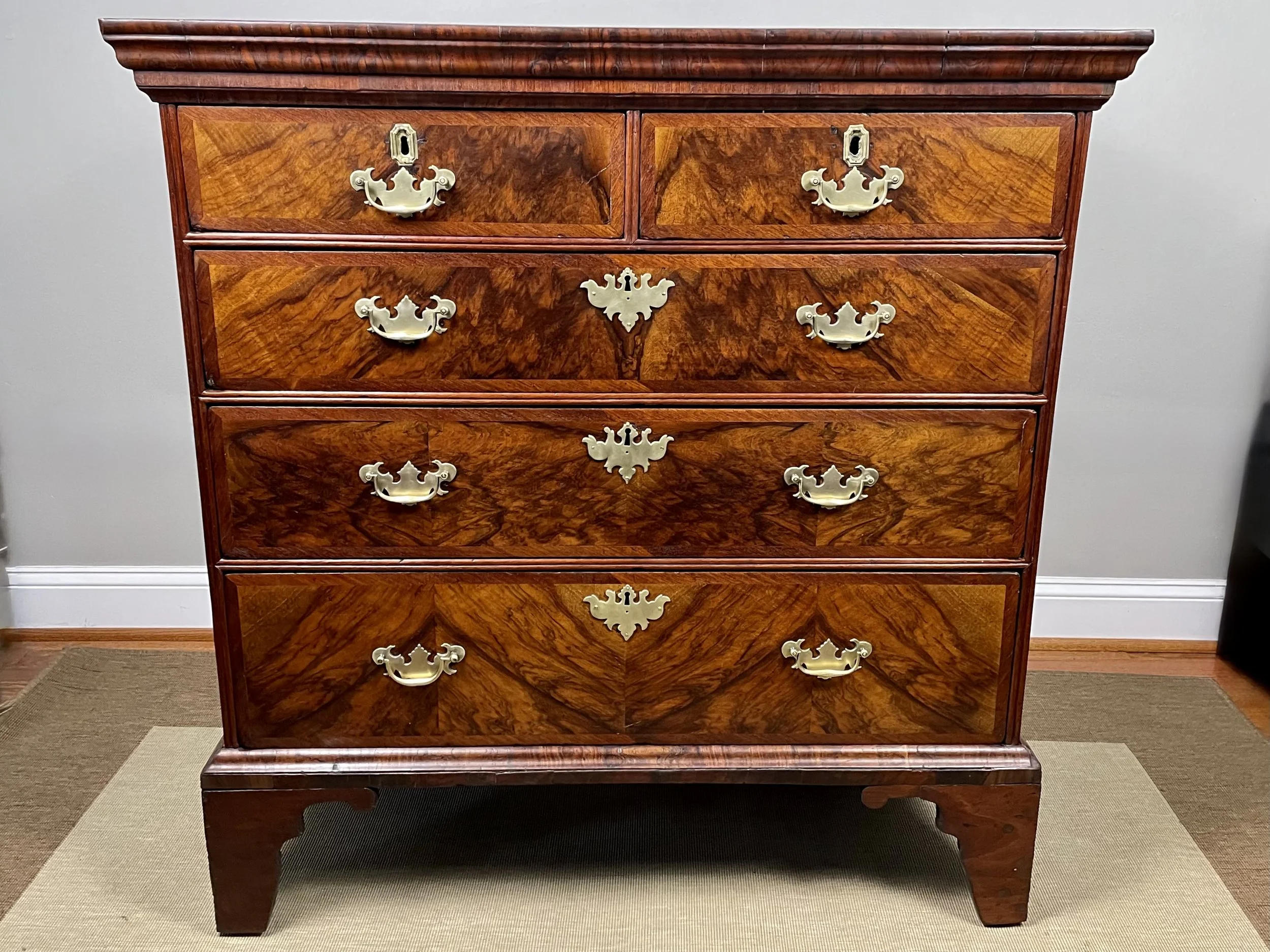
A striking English walnut chest of drawers from the first quarter of the 18th century (c. 1700–1725), retaining a remarkable amount of early material and surface character throughout, and containing design and construction elements spanning the William & Mary, Queen Anne, and early Georgian periods.
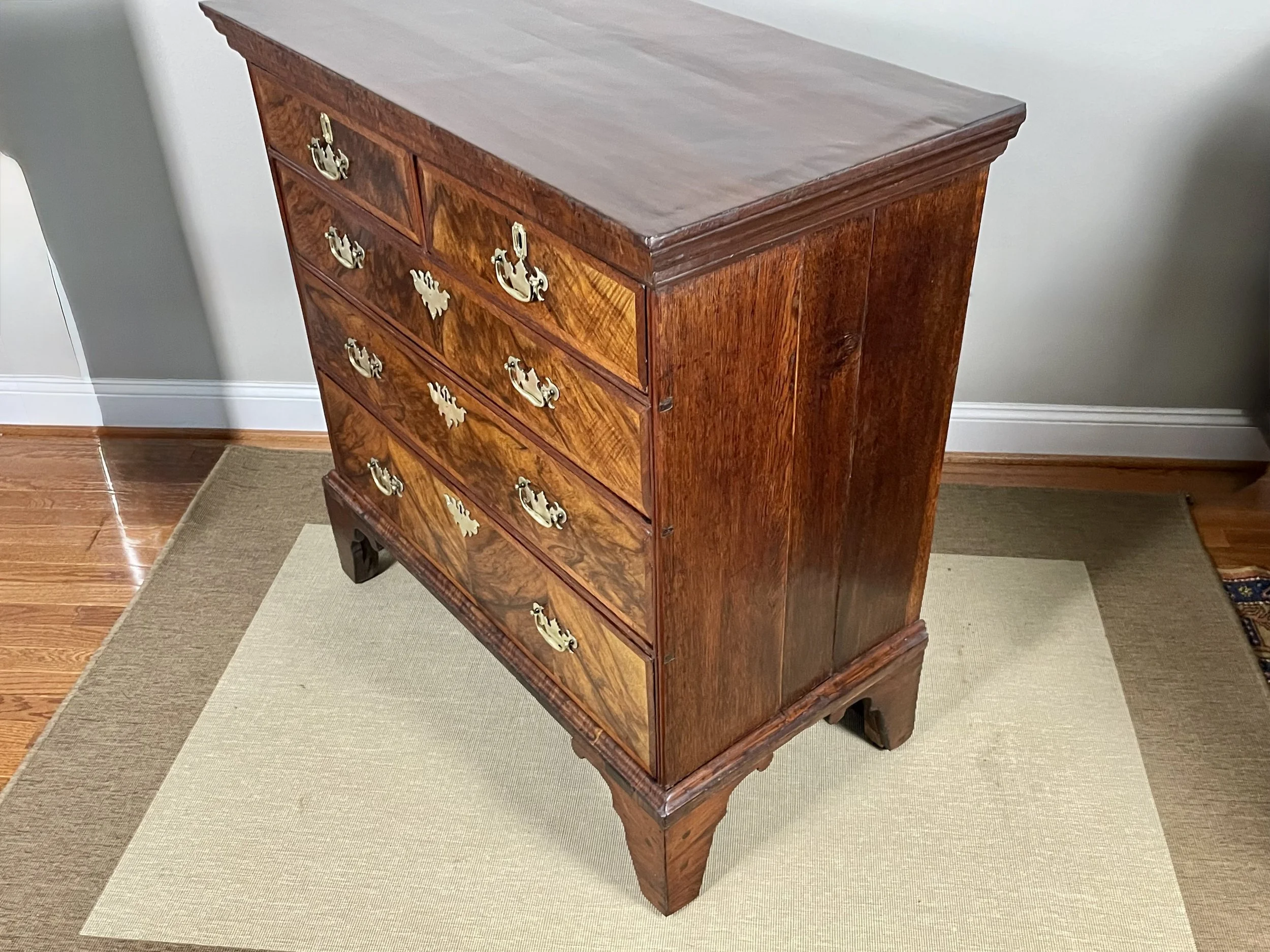
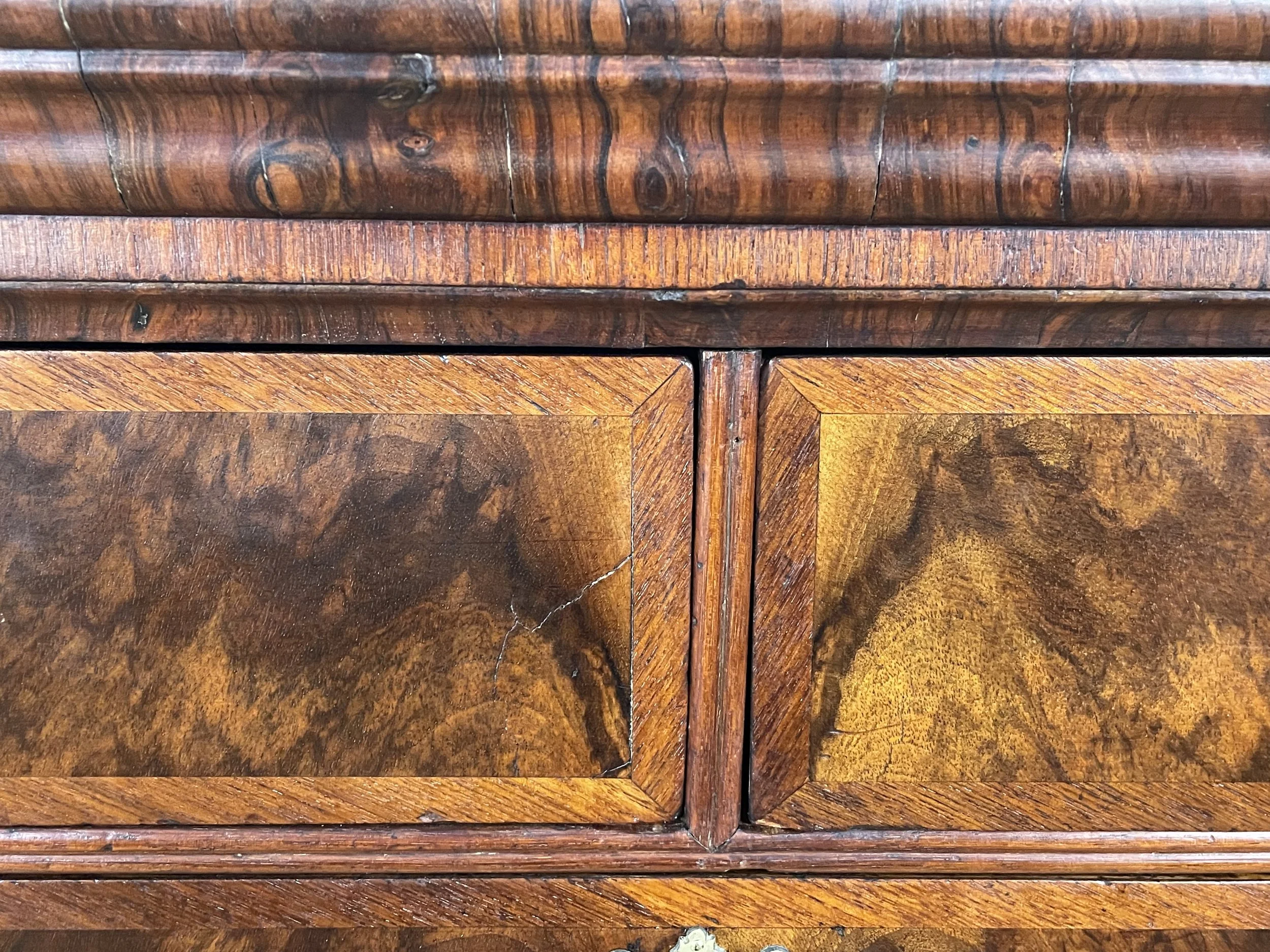
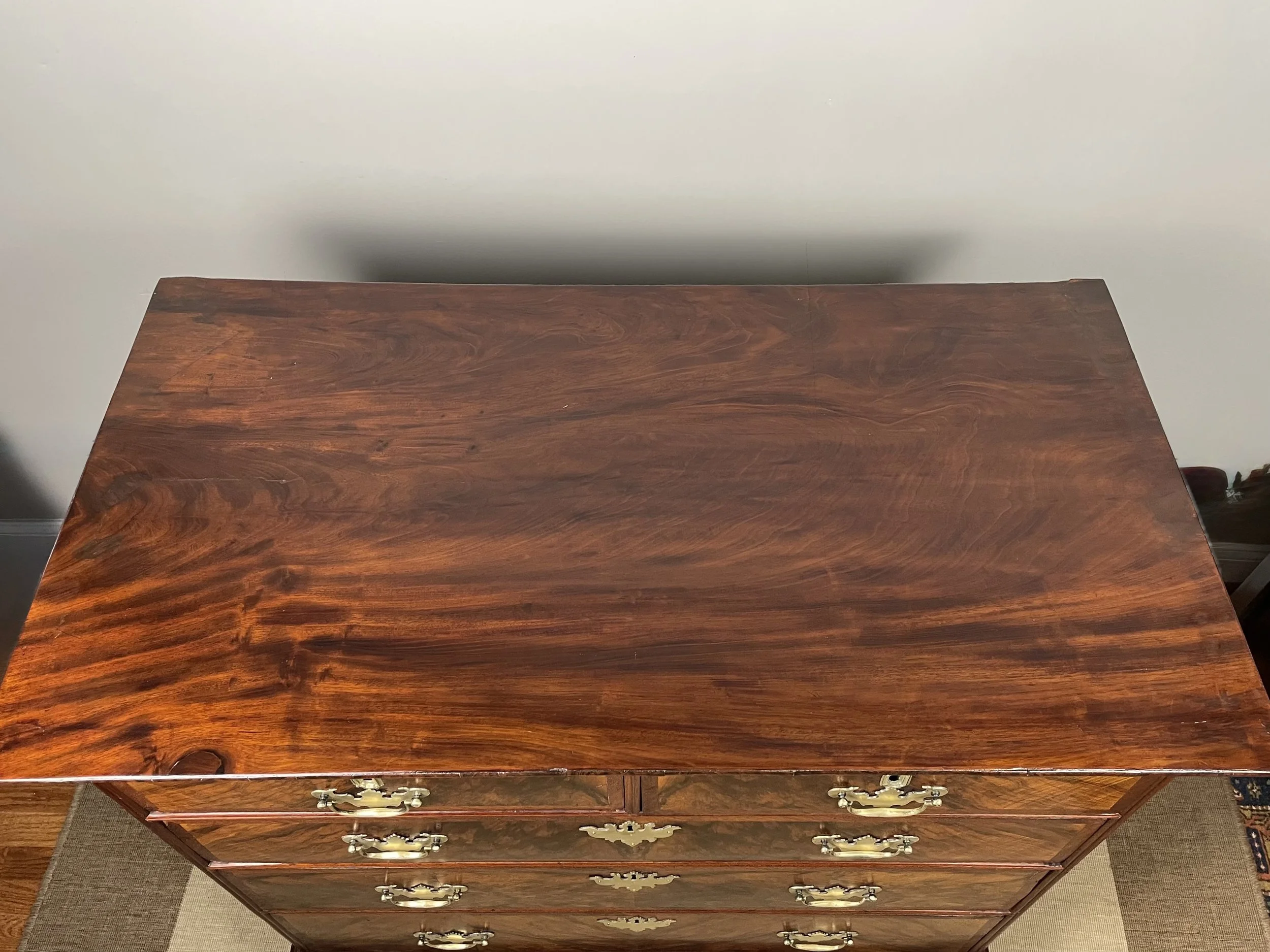
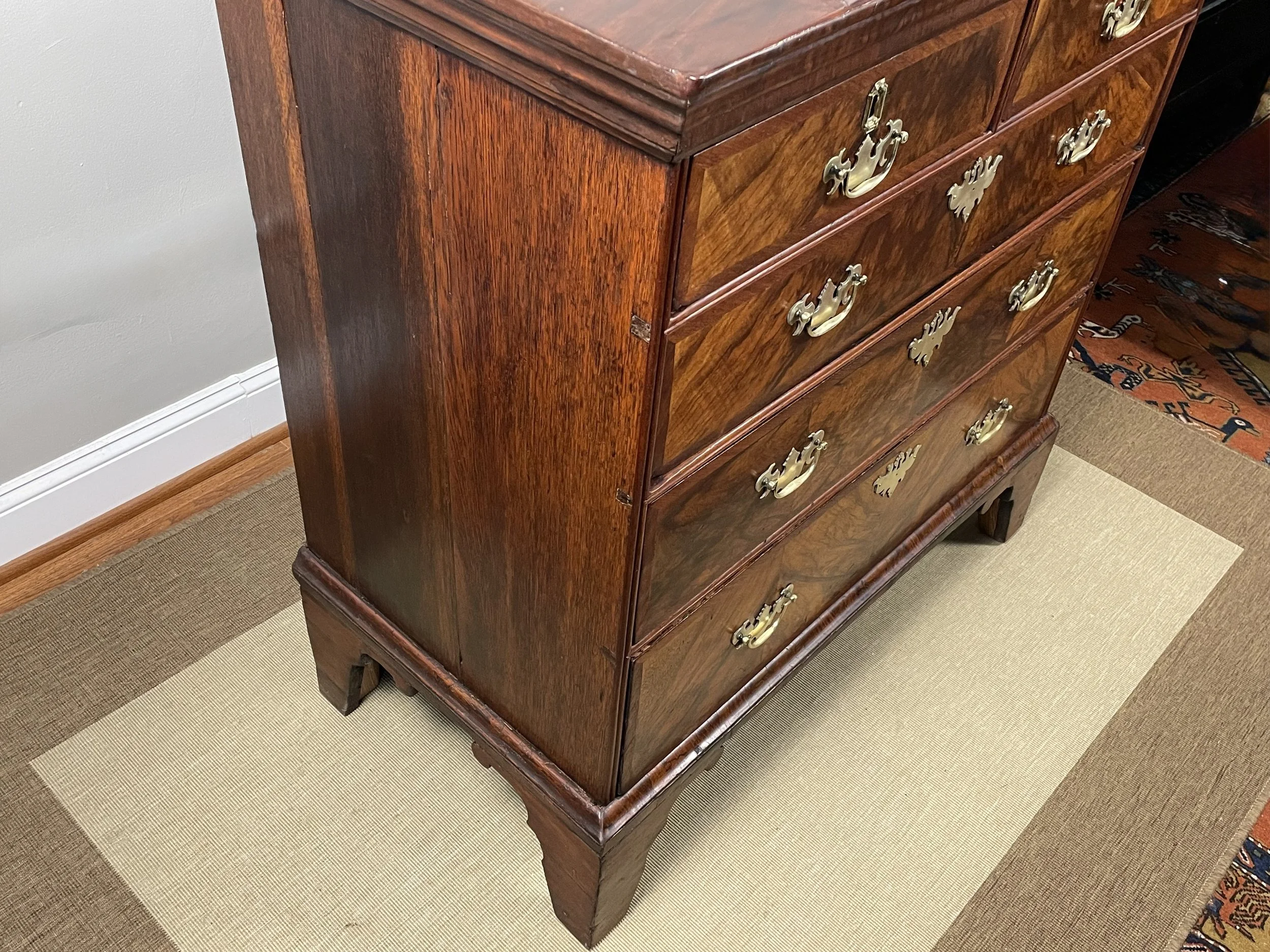
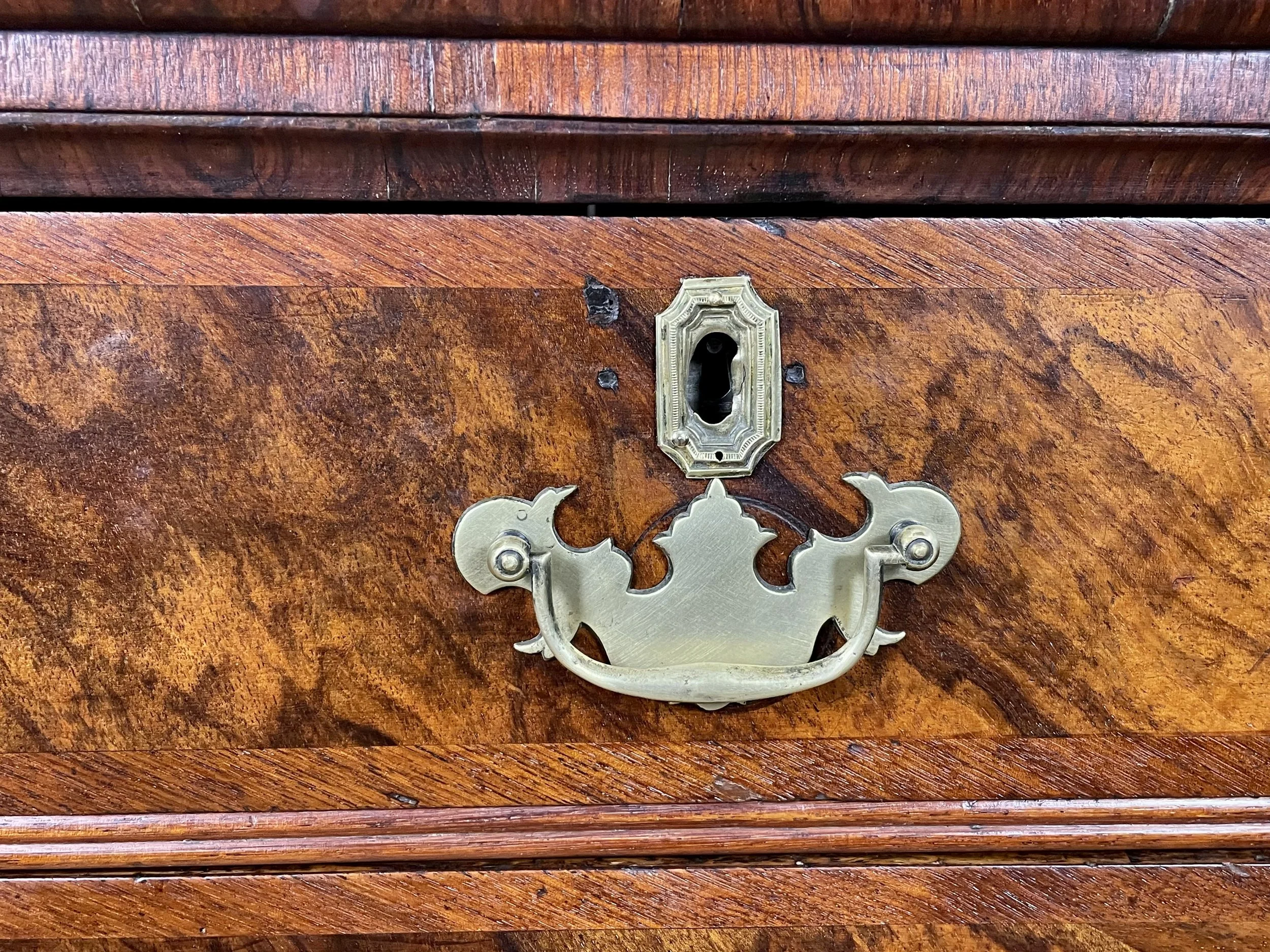
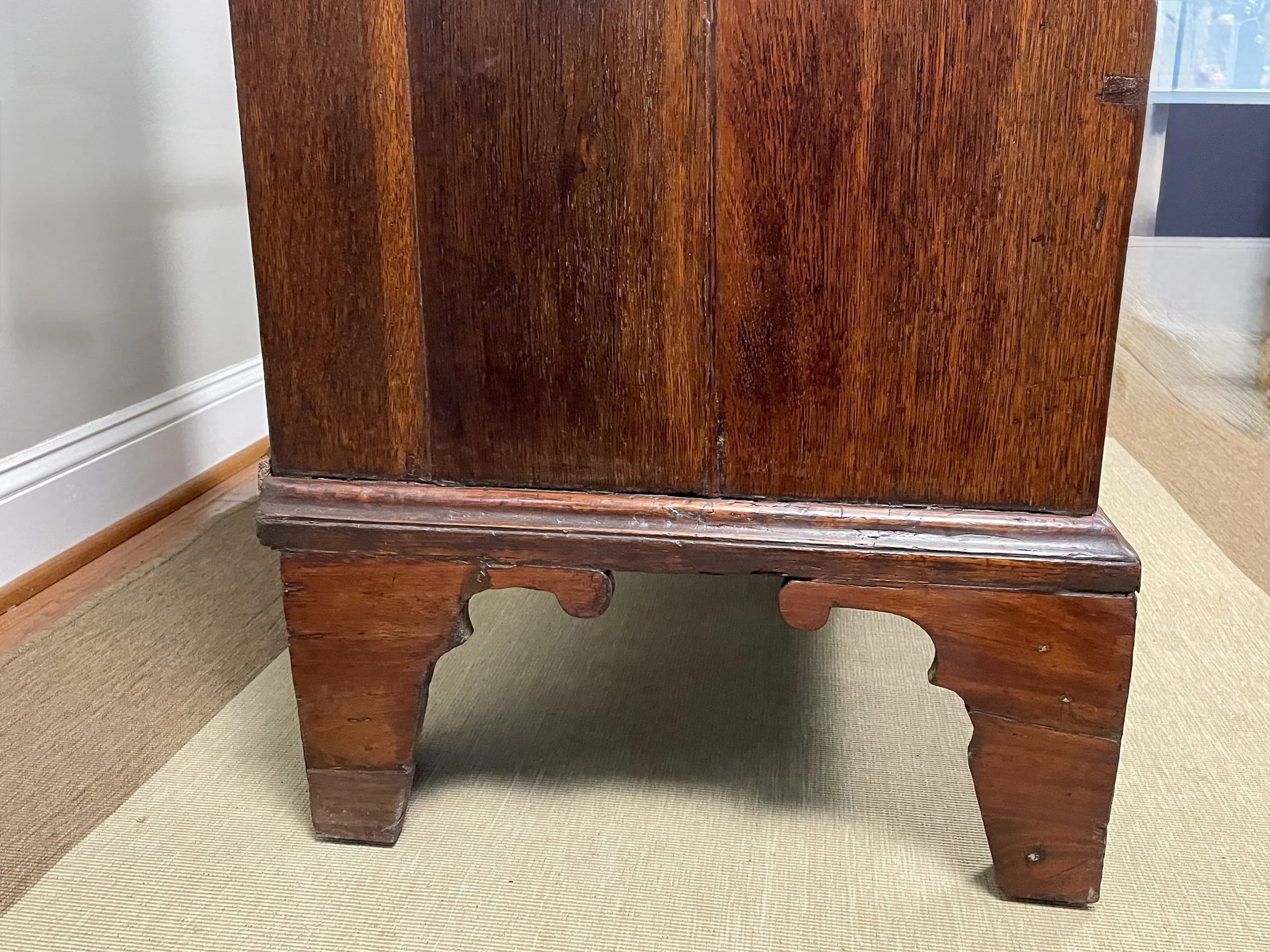
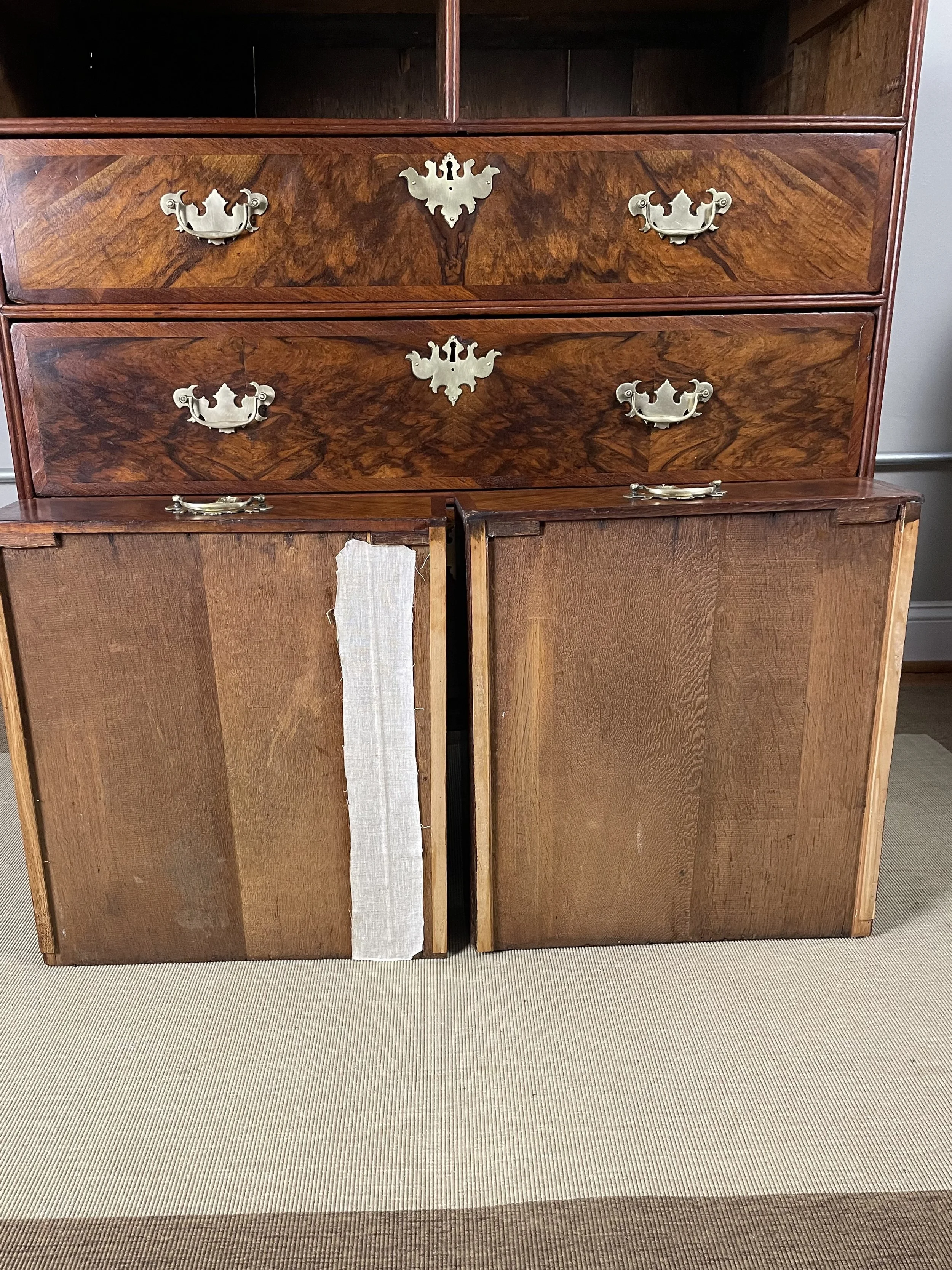
The chest is constructed in oak and stands on boldly shaped bracket feet beneath a molded upper case. Framed by a rarely used double-reeded bead molding, the facade is organized with two short drawers over three long graduated drawers. The drawer fronts are veneered in dramatically figured walnut laid in symmetrical book-matched patterns and surrounded by walnut cross-banding.
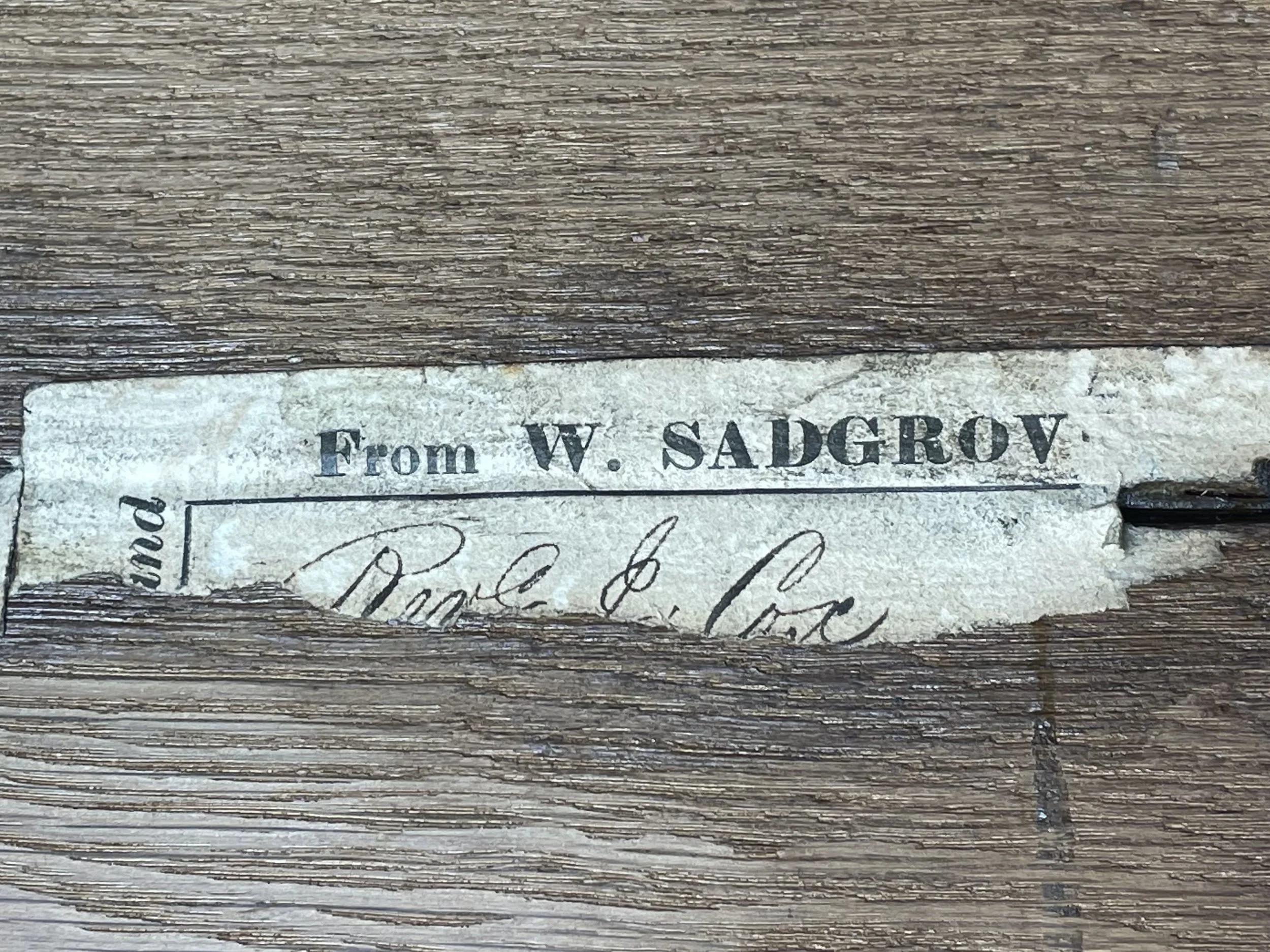
A partial underside label appears to reference the London shop of W. Sadgrove, a Victorian furniture broker and cabinetmaker; a photograph of the label is included for documentation.
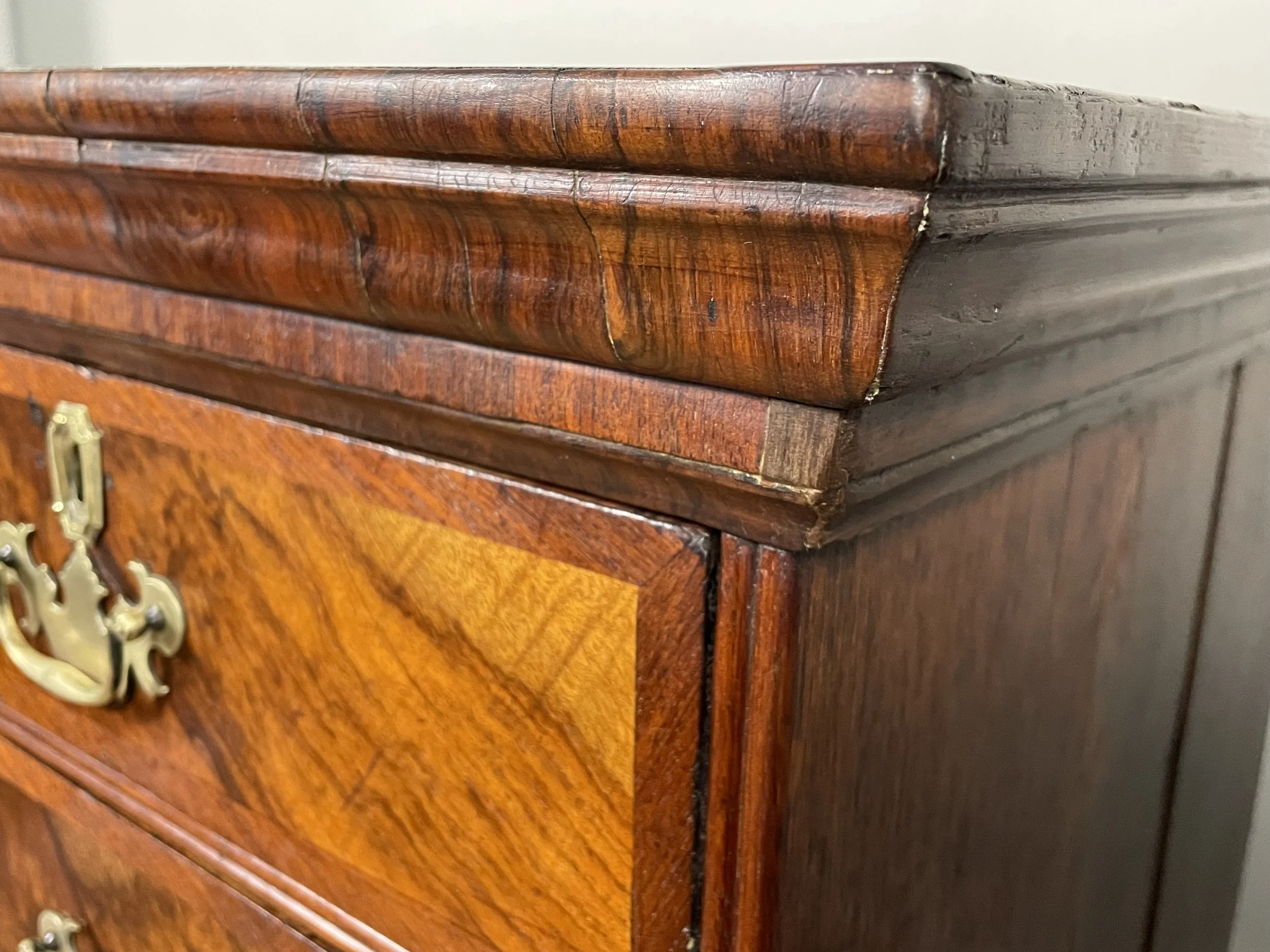
The upper molded cornice transitions through a double convex curve into a veneered walnut frieze before resolving into a lower cove molding. As is typical of the period, portions of the side cornice construction utilize secondary softwood elements intended for concealed areas.
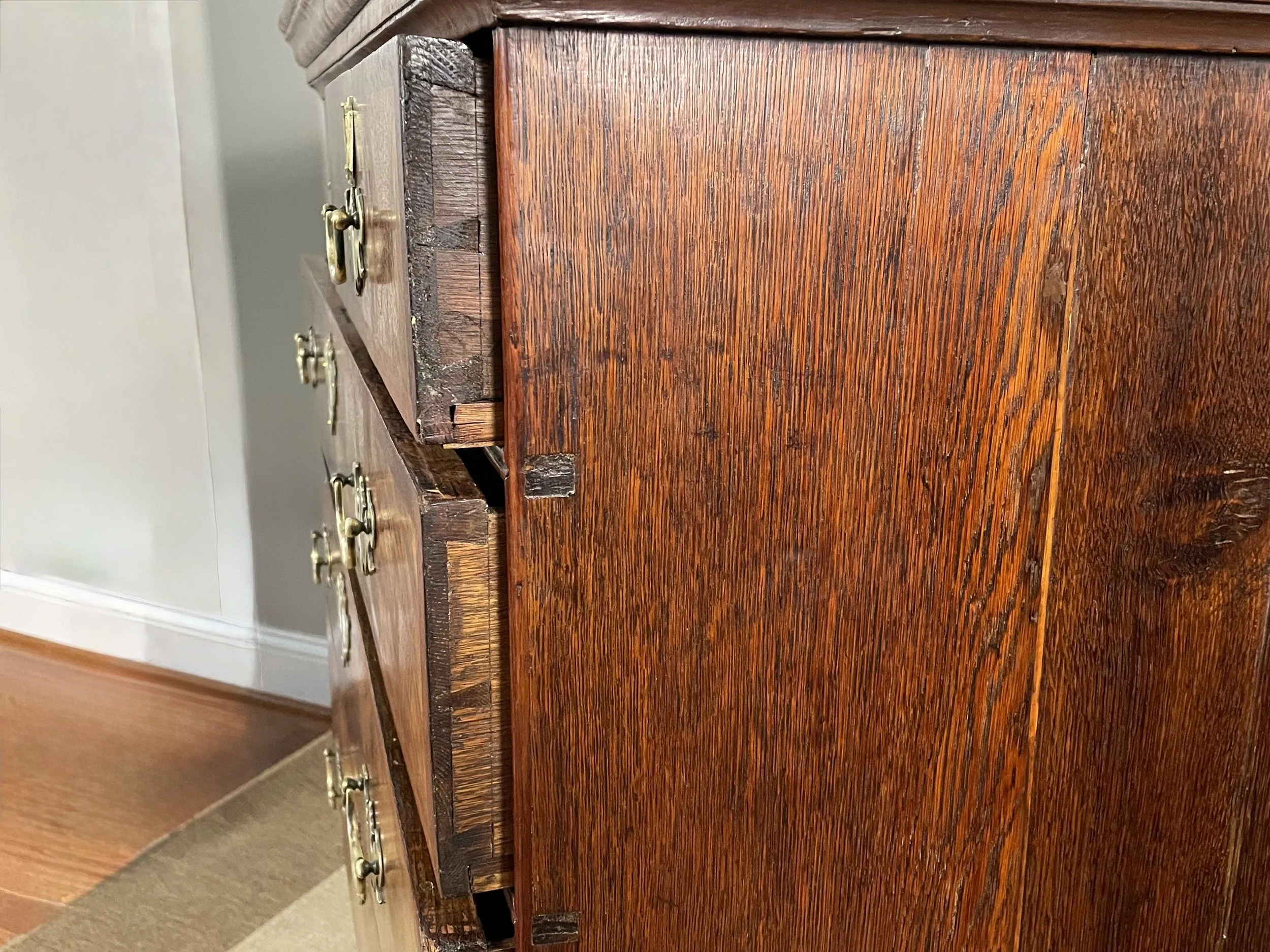
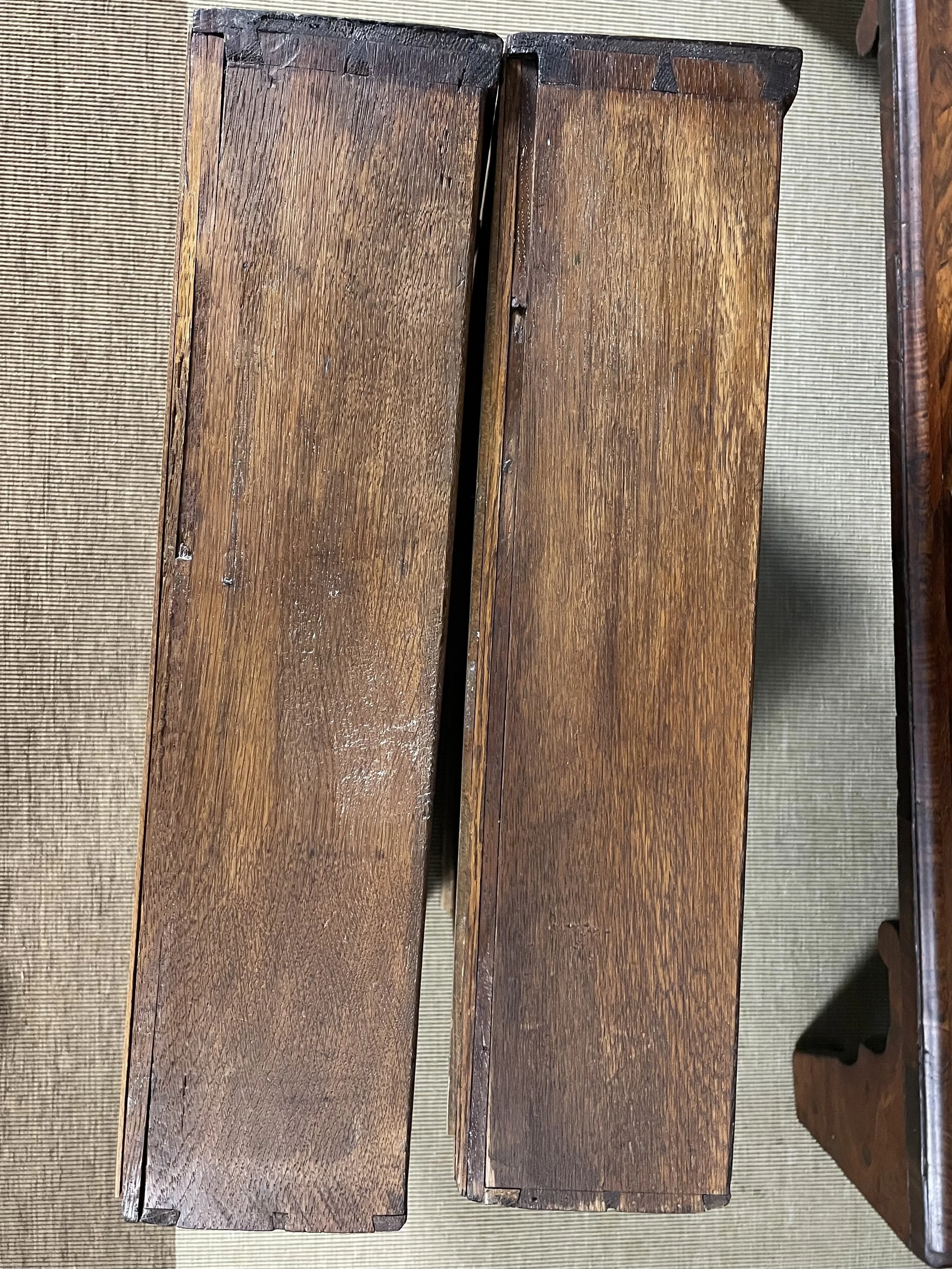
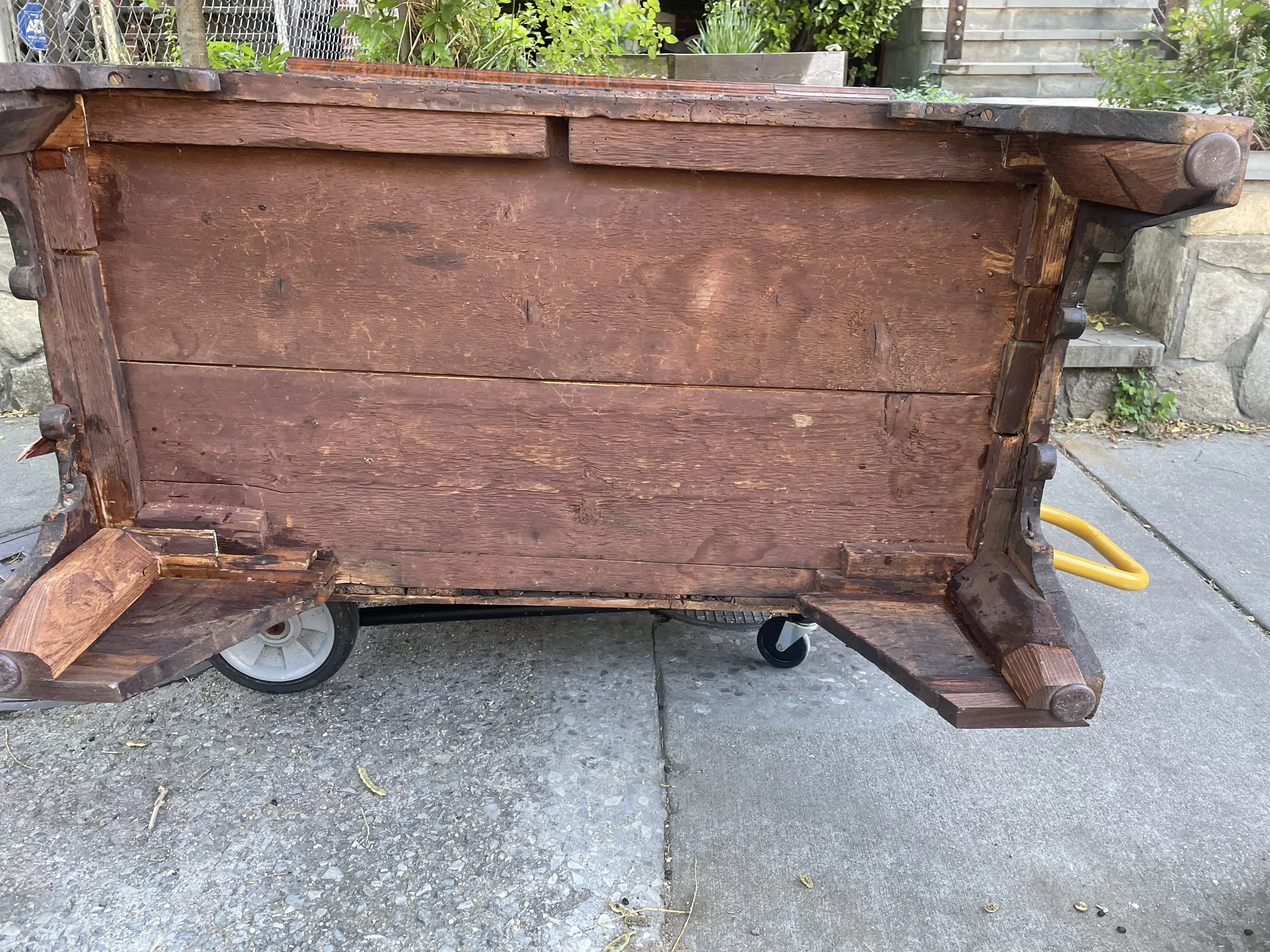
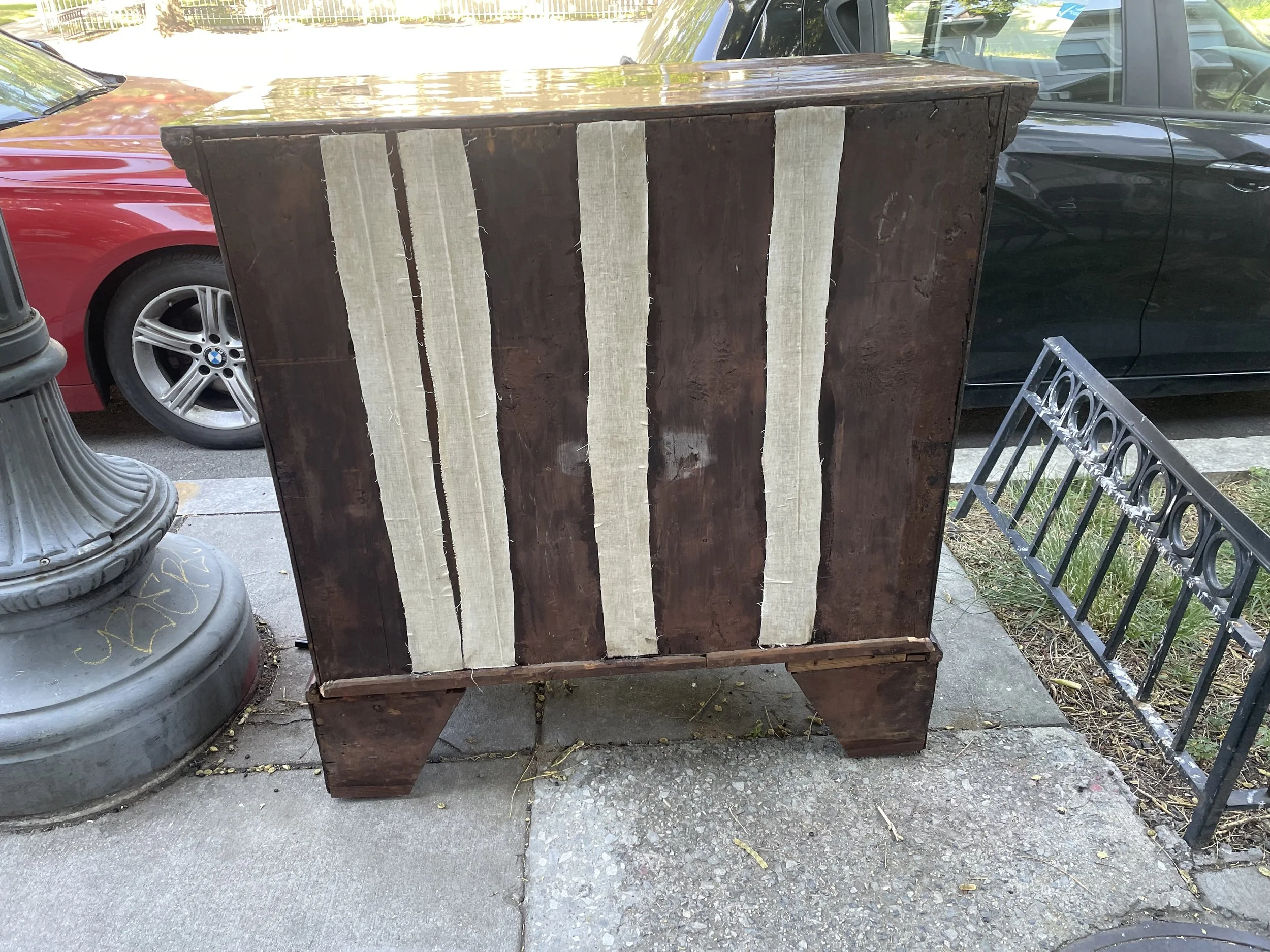
The oak secondary wood construction remains highly visible internally and is consistent with early English cabinetmaking practices of the period. Drawer sides, runners, and structural elements display substantial hand-worked surfaces and early joinery throughout.
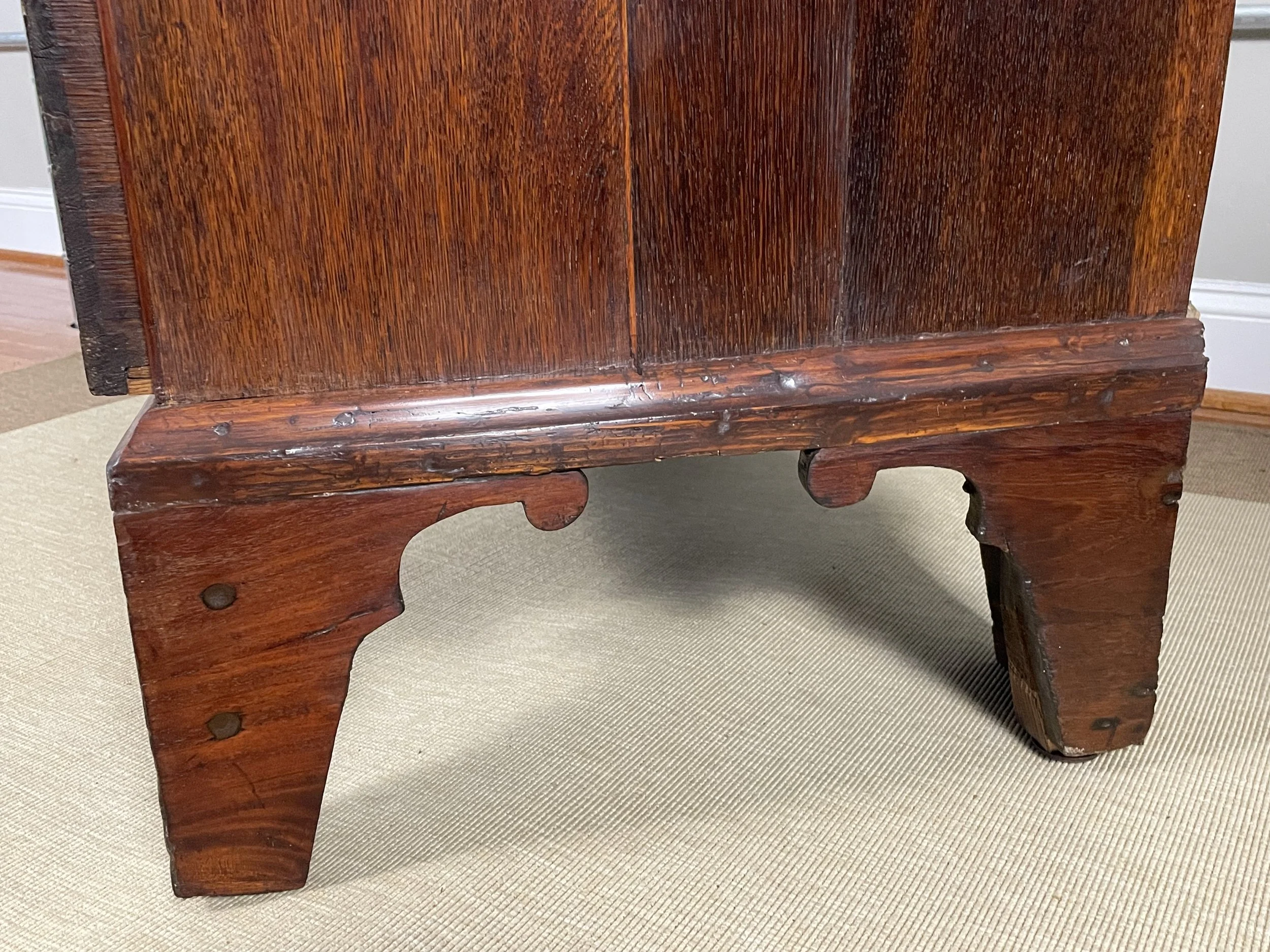
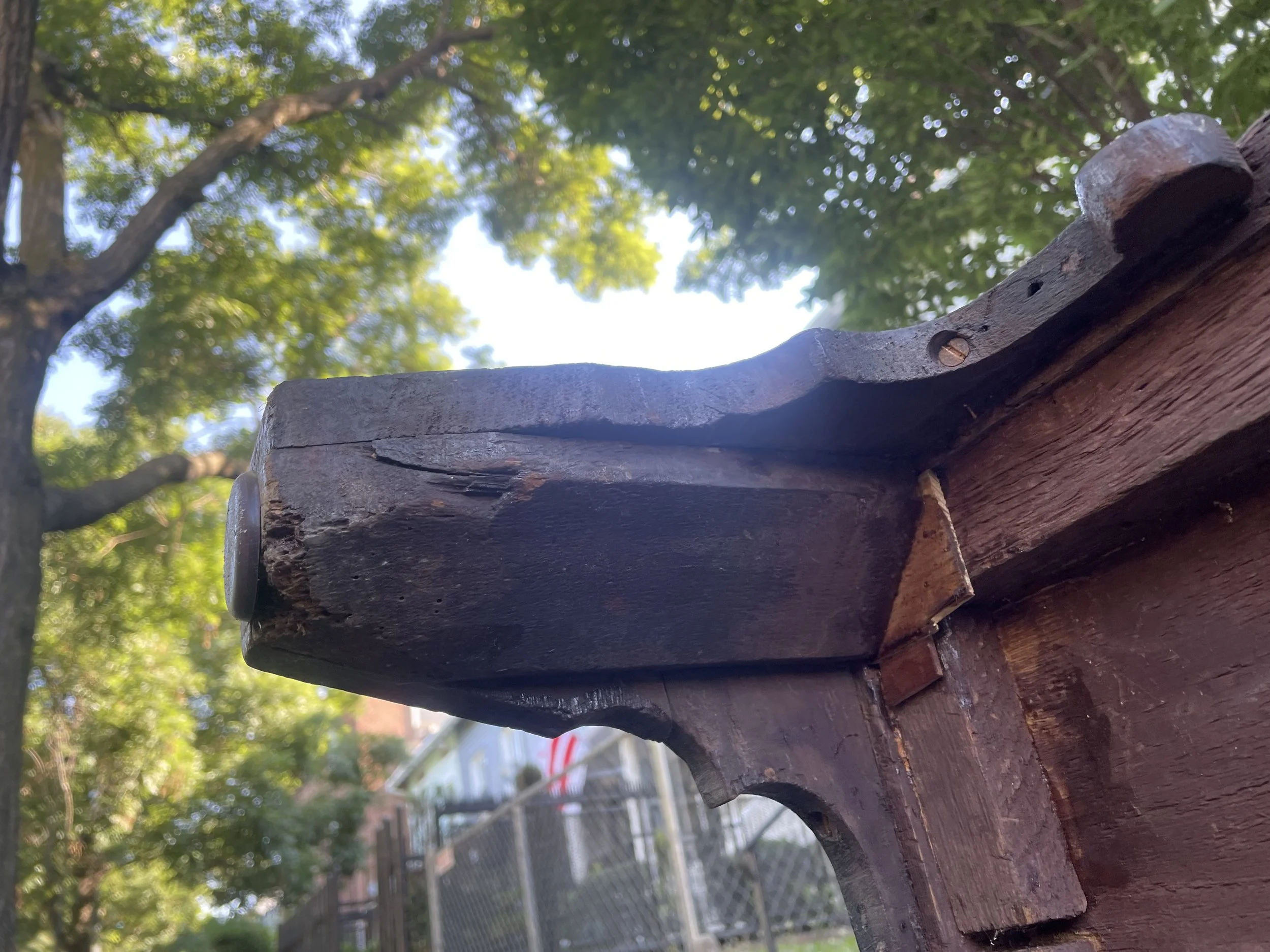
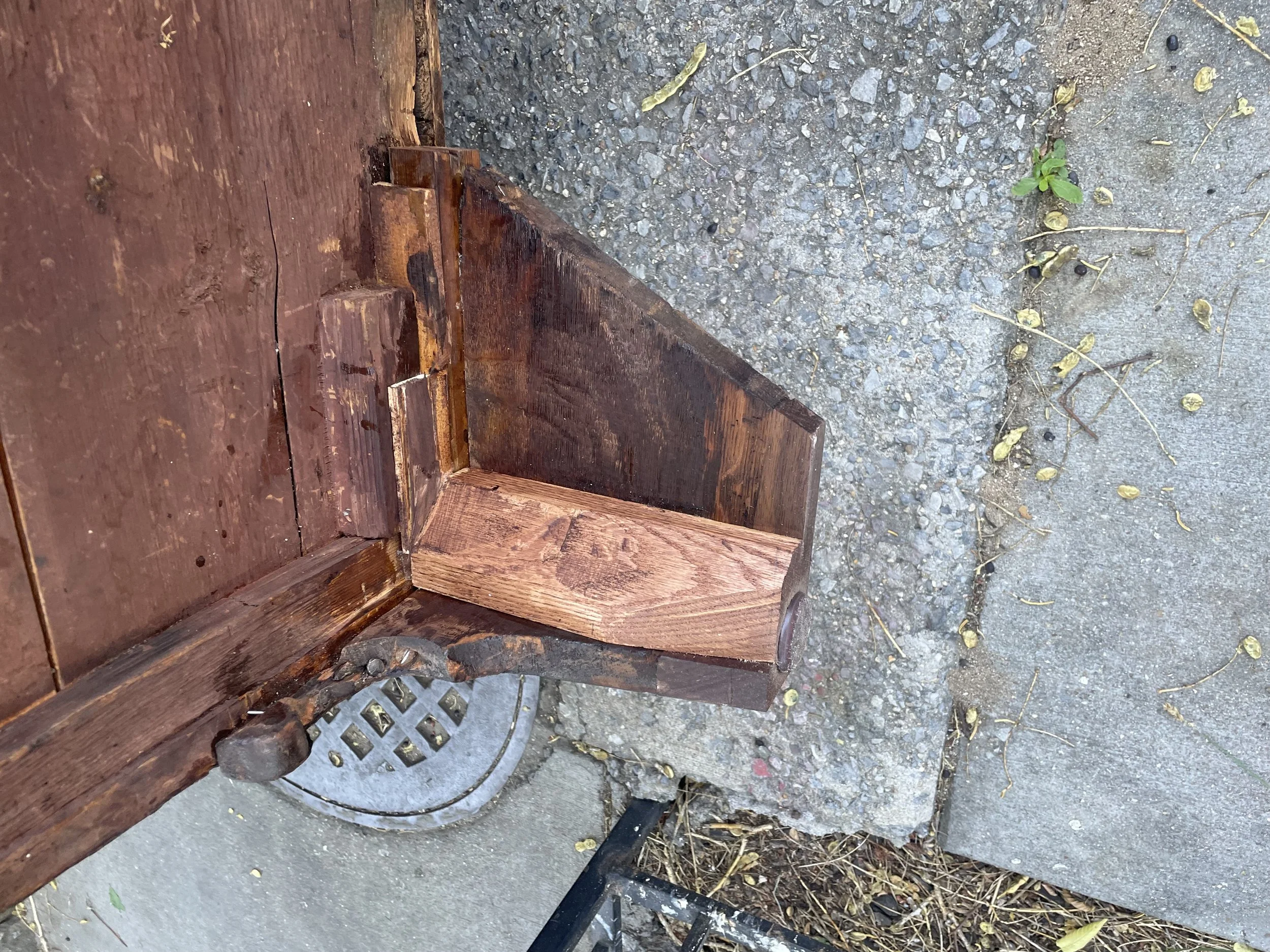
The bracket feet are believed to be original to the chest, an increasingly uncommon survival on early English case furniture. They show centuries of wear, historic alteration, and use, all of which contribute to the authenticity and honesty of the piece. Limited restorations were undertaken where structurally necessary, including localized repairs to areas affected by worm damage and loss, while preserving the original profile and hand-worked character.
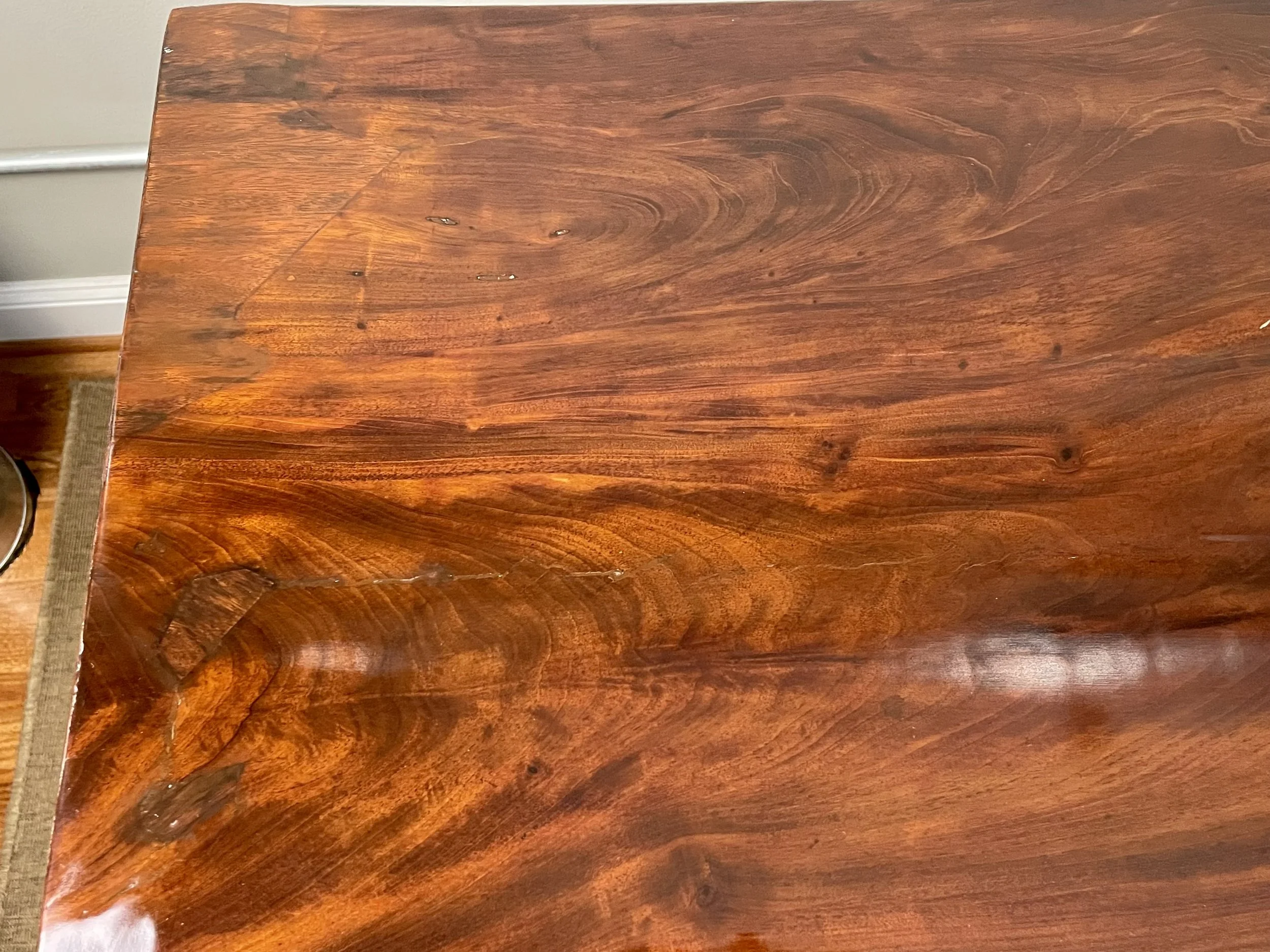
Based on construction and comparative scholarship, the carcass and overall form likely predate the widespread use of highly figured mahogany veneers associated with the mid-18th century. The top, while clearly possessing considerable age itself and having been repaired and consolidated (see photos), may represent a later replacement. Rather than diminishing the piece, these accumulated evolutions form part of its historical narrative as a working object that remained in use across generations.
The brass pulls and most of the escutcheons are later replacements. Two smaller keyhole escutcheons may be period or very early replacements.
The chest has recently undergone careful conservation and restoration using traditional materials and techniques intended to preserve surface depth, texture, and historical integrity. The result is a surface with warmth, variation, and luminosity appropriate to a piece of this age.
An unusually evocative and scholarly example of early English walnut furniture, combining strong architectural form, exceptional figured veneers, honest surface history, and substantial period craftsmanship.